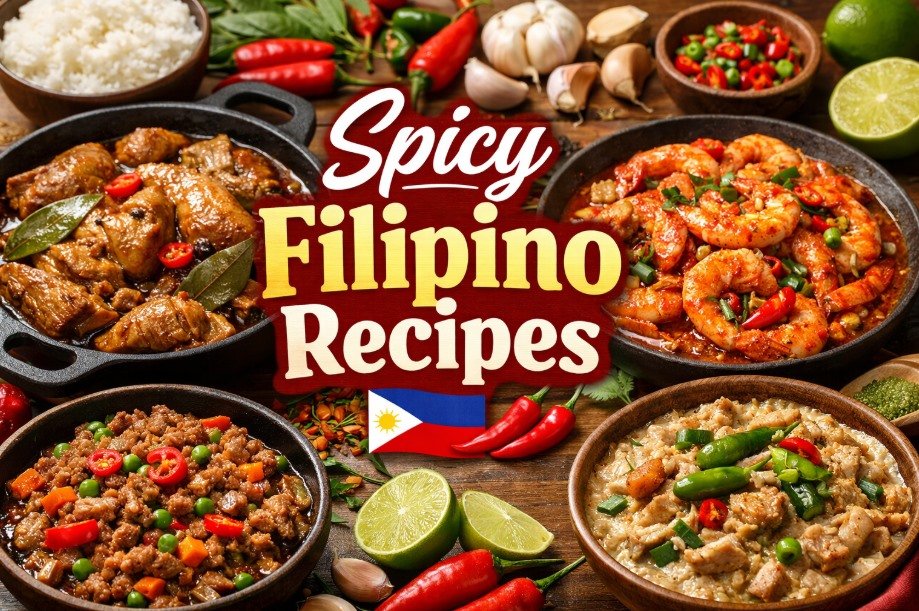
Filipino cuisine is adored for its comforting meals, straightforward ingredients, and rich flavour. Although most Filipino recipes are simple to follow, many people believe that cooking Filipino food requires a high level of expertise. This is particularly true for foods that are spicy. Anyone can make tasty meals at home with simple cooking equipment and common ingredients. The simple, spicy Filipino recipes in this article are ideal for novices, students, and time-pressed home cooks. These recipes don’t call for expensive ingredients or sophisticated methods. They are useful, satisfying, and simple to modify according to your level of spice tolerance. You can enjoy homemade food while saving money and time by learning how to prepare these meals.
Understanding Spice in Filipino Cooking
Filipino cuisine uses spices to add flavour and warmth rather than to cause pain. Although they are frequently used, chillies like siling labuyo and long green chillies are added according to personal preference. While some people prefer mild spice, others like intense heat. One of the reasons basic spicy Filipino recipes are so well-liked is this adaptability. To regulate the heat, you can cut back on the number of chillies, take out the seeds, or add them later in the cooking process. Filipino cuisine also strikes a balance between spice and flavours that are sour, salty, and slightly sweet. Coconut milk, tomatoes, fish sauce, vinegar, and soy sauce all contribute to this harmony. Meals are always served with rice, which also lessens the heat of spicy foods.
Basic Ingredients You Will Often Use
The majority of Filipino kitchens use readily available and reasonably priced ingredients. Almost every dish uses onions and garlic. While vinegar and soy sauce are popular seasonings, fish sauce gives many recipes depth. The basic list is completed with chillies, bay leaves, black pepper, and cooking oil. Because they are satisfying and simple to prepare, meat options like pork and chicken are popular. Vegetables and seafood are also frequently utilised. The simplicity of these ingredients makes cooking at home less stressful. Because of this, basic spicy Filipino recipes are appropriate for regular meals.
Easy Spicy Filipino Dishes for Beginners
Spicy chicken adobo is among the simplest dishes to try. All you need is chicken, garlic, vinegar, soy sauce, bay leaves, and chillies to cook it in a single pot. The sauce naturally thickens while the chicken is simmered until it is tender. Spicy pork giniling is another dish that is suitable for beginners. Garlic, onions, tomatoes, and chopped chillies are used to cook ground pork. It cooks quickly and goes well with rice. Another quick option that takes less than fifteen minutes is spicy prawns sautéed with garlic and chillies. These recipes demonstrate how flavourful, straightforward, spicy Filipino recipes can be made without complex steps.
Simple Cooking Techniques That Matter
The first step in Filipino cooking is typically heating oil and sauteing onions and garlic. This is a flavor-building step that should not be rushed. Medium heat is ideal for garlic because it burns easily. You can add chillies later for a fresher flavour or earlier for a deeper heat. Another popular method for making stews and soups is simmering. It keeps the meat tender while allowing flavours to meld gradually. Vegetables and noodles are stir-fried over a higher heat for a shorter period of time. Cooking becomes simpler and more pleasurable when you understand these fundamental techniques.
Adjusting Heat and Flavor
It’s okay that different people have different levels of tolerance for spicy food. Control is one benefit of cooking at home. If a dish gets too hot, you can counterbalance it with coconut milk, broth, or a tiny bit of sugar. Additionally beneficial are sour ingredients like calamansi or vinegar. It’s crucial to taste while cooking. Instead of adding all the seasoning at once, adjust it gradually. This practice aids in your comprehension of how flavours interact. You will eventually gain more self-assurance when cooking straightforward, spicy Filipino dishes that suit your preferences.
Cooking for Daily Life and Meal Prep
Many Filipino dishes taste better the next day because the flavors continue to develop. This makes them great for meal prep. Spicy adobo, pork stews, and vegetable dishes store well in the refrigerator and are easy to reheat. Cooking once and eating several times saves effort and money. These meals are also filling, which helps reduce the need for snacks or fast food. Because simple spicy Filipino recipes use common ingredients, they fit well into weekly meal plans.
Sharing Food and Culture
Food plays an important role in Filipino culture. Meals are often shared with family and friends, creating connection and comfort. Cooking at home allows you to pass on traditions and introduce others to Filipino flavors. Spicy dishes are especially enjoyable when shared, as everyone can adjust the heat to their liking. Serving home-cooked food also feels more personal than ordering from a restaurant. Simple spicy Filipino recipes are a great way to bring people together without stress or pressure.
Building Confidence in the Kitchen
Cooking is a skill that improves with practice. Starting with easy dishes helps build confidence. Once you are comfortable with a few recipes, you can begin making small changes, such as adding vegetables or trying different proteins. This process helps you develop your own style. Mistakes may happen, but they are part of learning. Filipino cooking is forgiving, and flavors can often be adjusted. With time, simple spicy Filipino recipes will feel natural and enjoyable to prepare.
Final Thoughts
Making tasty food doesn’t have to be difficult. Anyone can make delectable meals at home with basic ingredients, easy methods, and a desire to learn. All skill levels can enjoy the bold taste, comfort, and versatility of simple spicy Filipino recipes. They are useful in day-to-day living and significant when shared with others. You can enjoy warm, filling, and simple Filipino food by starting small and cooking frequently.